Starvard University · Cooking
Feed yourself well for less money. Twelve plain-English lessons on kitchen basics, knife skills, and simple meals anyone can make. If you can read, you can cook.

The whole course in brief
The twelve lessons
Lesson 1
A home-cooked meal costs a third to a fifth of the restaurant version, has half the calories, and you control everything in it. Someone eating out twice a day spends thousands a year more than someone cooking, and usually feels worse doing it. Cooking is one of the highest-return skills an adult can learn, measured in money, health, and daily satisfaction.
It is also easier than the food world wants you to believe. The industry sells complexity: gadgets, thirty-ingredient recipes, techniques with French names. Real home cooking is simple food, cooked simply, eaten happily. If you can read a recipe and operate a stove without fear, you are ninety percent of the way there.
Start where you are. If you currently cook zero meals, cooking three dinners a week is a revolution. Do not aim for chef. Aim for competent. Competent cooks eat well for life, spend far less, and impress dinner guests without trying. This course takes you from zero to competent in twelve lessons.
Lesson 2
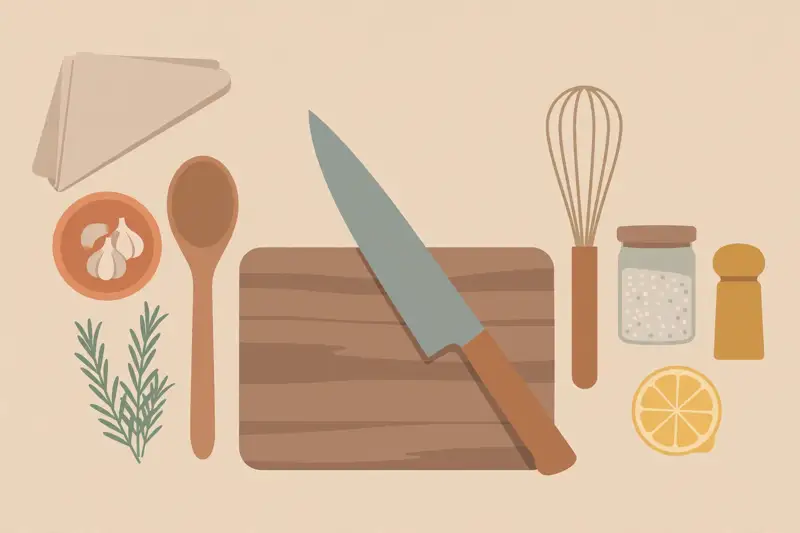
You need ten tools, not fifty. One good chef's knife (8 inch), one cutting board (big), one large skillet, one pot with a lid, one sheet pan, one wooden spoon, one spatula, one set of measuring cups, one colander, one instant-read thermometer. That is a complete kitchen. Everything else is nice but optional.
Spend on the knife and the skillet. A sharp, comfortable knife makes cooking joyful; a dull one makes it miserable and dangerous. A heavy skillet (cast iron or stainless) holds heat evenly and lasts decades. Buy the rest cheap. A pot is a pot. Upgrade later if you ever feel limited, which most home cooks never do.
Keep the knife sharp. A sharp knife is safer than a dull one because it goes where you push it instead of slipping. Hone it regularly with a steel, sharpen it a few times a year. And skip the gadget drawer: avocado slicers, garlic presses, and single-use tools are clutter. The knife does all of it.
Lesson 3
All knife work is three cuts: chop (rough pieces), dice (even cubes), slice (thin flat pieces). Learn these and you can prep any recipe. The technique is the same for all three: curl your fingertips under on the guiding hand (the claw), keep the knife tip on the board, and rock or glide the blade. Slow is smooth, smooth becomes fast.
Cut things to even sizes. This is the real secret: even pieces cook evenly. Uneven pieces mean burnt bits and raw bits in the same pan. Take the extra thirty seconds to make your dice uniform. It is the difference between amateur and competent, and it costs nothing but attention.
Practice on onions. They are cheap, forgiving, and in everything. Halve, peel, make horizontal cuts, make vertical cuts, then chop across. Ten onions and your knife skills will embarrass most home cooks. Respect the blade, keep it sharp, and never catch a falling knife. Let it fall.
Lesson 4
A stocked pantry turns "what is for dinner" from a crisis into a choice. Buy the staples once and they last for months: olive oil, salt, pepper, garlic, onions, canned tomatoes, beans, lentils, rice, pasta, oats, peanut butter, soy sauce, vinegar, basic spices (cumin, paprika, oregano, chili flakes). With these on hand, you are never more than fresh protein and vegetables away from dinner.
Keep the flavor builders stocked too. Lemons, butter, honey, mustard, hot sauce: small things that make simple food taste finished. A squeeze of lemon or a knob of butter at the end transforms a plain pan of vegetables. Restaurants do this constantly. Now you can too.
Restock on a rhythm, not on panic. Keep a running list on your phone and add to it when you use the last of something. One weekly grocery trip for fresh stuff, pantry staples bought in bulk monthly. The stocked kitchen is the difference between cooking and ordering takeout at 7pm.
Lesson 5
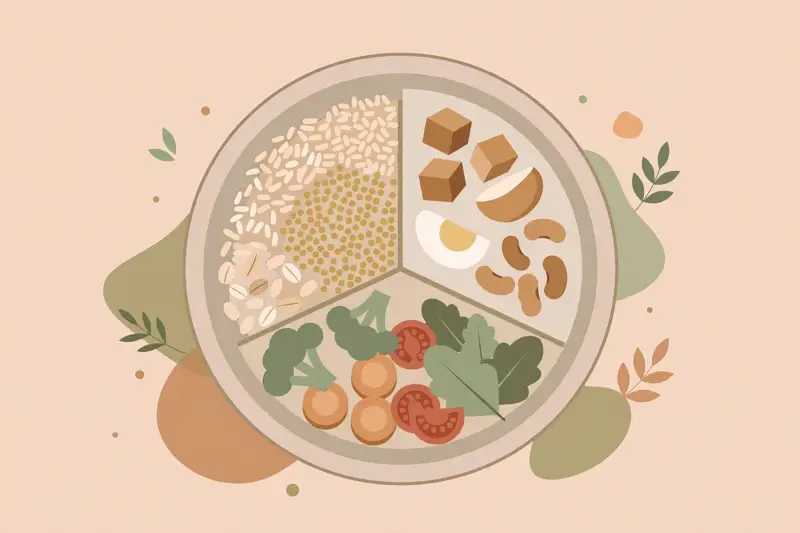
Here is the formula that ends dinner indecision forever: protein plus vegetable plus grain. Chicken plus broccoli plus rice. Salmon plus asparagus plus potatoes. Beans plus peppers plus tortillas. Tofu plus bok choy plus noodles. Mix and match endlessly. This one formula is ten thousand dinners.
Cook each part simply. Season the protein with salt, pepper, and oil, then sear, roast, or grill it. Roast the vegetables with olive oil and salt at high heat until the edges char. Cook the grain in salted water or a rice cooker. Three simple preparations, one plate, dinner in thirty minutes. No recipe required.
Vary the flavors, not the formula. Monday: soy sauce, ginger, sesame. Tuesday: cumin, lime, cilantro. Wednesday: garlic, lemon, oregano. Same formula, different continents. Once the formula is automatic, you will wonder why dinner ever felt hard.
Lesson 6
Eggs are the perfect beginner food: cheap, fast, nutritious, and forgiving. Learn three preparations and breakfast is solved forever. Scrambled: low heat, butter, constant stirring, take them off just before they look done. Fried: hot oiled pan, crack, cook until whites set, salt. Omelet: beaten eggs in a buttered pan, fillings on one half, fold.
The universal egg rule is about heat: eggs punish high heat and reward patience. Rubber eggs come from too-hot pans. Creamy eggs come from low heat and butter. If your eggs are browning, the pan is too hot. Turn it down. Eggs teach heat control, which is half of all cooking.
Keep eggs as your backup dinner too. A vegetable omelet, fried rice with a fried egg, or shakshuka (eggs poached in tomato sauce) are real dinners in fifteen minutes. The dozen eggs in your fridge is a standing invitation to never order takeout out of desperation again.
Lesson 7
One-pot meals are the weeknight hero: everything in a single pot, minimal dishes, maximum comfort. The method is universal. Brown your protein, soften your aromatics (onion, garlic), add liquid and hearty ingredients, simmer until everything is tender. Soup, stew, chili, curry: same skeleton, different spices.
Learn the layering. Browning first builds flavor through the Maillard reaction, which is the difference between bland and rich. Deglaze with liquid to capture the browned bits. Season in layers: some at the start, adjust at the end. Taste before serving and fix it: needs salt, needs acid, needs heat. Trust your tongue.
One-pot meals also batch beautifully and taste better the next day. Make a double batch Sunday and eat it twice during the week. Chili, lentil soup, chicken stew, coconut curry: pick one a week and your weeknight dinners are half-solved before Monday morning.
Lesson 8
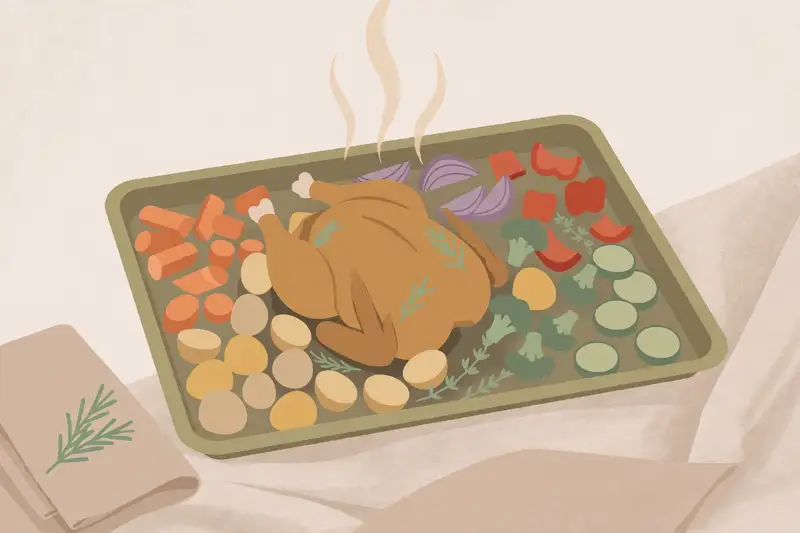
The sheet pan is the laziest great dinner in cooking. Chop protein and vegetables, toss with oil and seasoning, spread on a pan, roast at 425 degrees until done. Twenty-five minutes, one pan, dinner. Chicken thighs with potatoes and green beans. Sausage with peppers and onions. Salmon with asparagus. Tofu with broccoli and sweet potato.
The rules are simple. Cut everything to similar sizes so it finishes together. Do not crowd the pan: crowded vegetables steam instead of roast, so use two pans if needed. Put dense vegetables (potatoes, carrots) in a few minutes before quick ones (asparagus, greens). Oil and salt everything generously.
Finish with something fresh: lemon juice, herbs, a drizzle of good oil. That final bright note is what separates a good sheet-pan dinner from a great one. Line the pan with parchment for zero cleanup. This is the dinner you make when you have no energy, and it still tastes like you tried.
Lesson 9
Two hours on Sunday saves ten hours of weeknight decisions. Batch cooking is not meal-prepping identical containers for Instagram. It is preparing components: a grain, two proteins, roasted vegetables, a sauce, washed greens, hard-boiled eggs. Components mix and match all week into fresh-feeling meals.
The Sunday session: start the grain in the cooker, get protein in the oven, roast two trays of vegetables, simmer a sauce, boil eggs while everything cooks. Ninety minutes of mostly unattended time. Portion into containers, refrigerate, and your weeknights become assembly, not cooking: bowl plus protein plus vegetables plus sauce, heated in five minutes.
Keep it to foods you actually like and that hold well: rice, roasted chicken, ground turkey, roasted vegetables, beans, simple sauces. Skip delicate greens and fried things. Rotate the flavors weekly so it never feels like leftovers. Future you, walking in the door at 6:30pm Wednesday, will be deeply grateful.
Lesson 10
The cheapest meats are often the most flavorful; they just need time. Chuck roast, pork shoulder, chicken thighs, short ribs: tough cuts full of connective tissue that melts into richness with slow cooking. A $12 pork shoulder becomes twelve servings of pulled pork. That is a dollar a serving for food that tastes like a restaurant.
The method is always low and slow. Braise in a pot with liquid at low heat for hours, or use a slow cooker: sear the meat, add aromatics and liquid, walk away for six to eight hours. Time does the work. The meat should fall apart with a fork. Shred it, sauce it, serve over rice or in tacos or on buns.
Apply the same logic to plants. Dried beans cost pennies and beat canned on texture. Lentils cook in twenty minutes with no soaking. Cabbage, carrots, onions, potatoes: the humble vegetables are the cheapest in the store and the backbone of a hundred great meals. Expensive ingredients do not make great cooks. Technique does.
Lesson 11
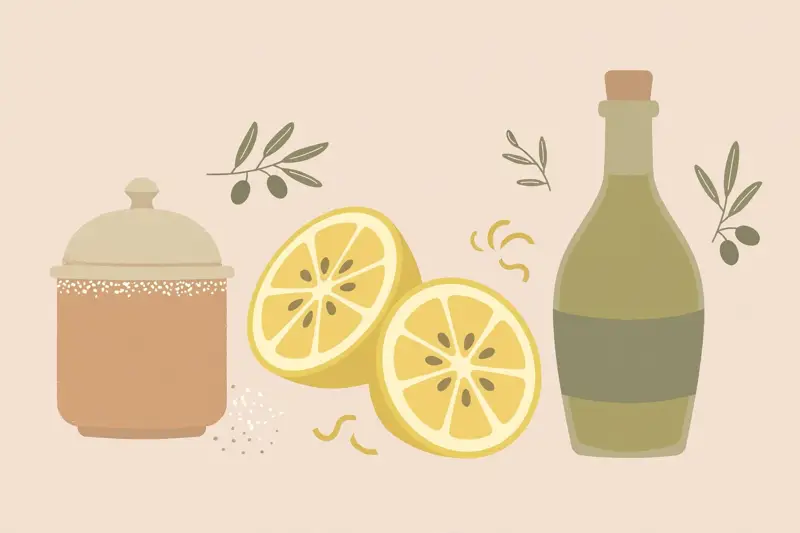
Nearly all flavor comes down to four levers: salt, acid, fat, and heat. Learn to use them and recipes become suggestions instead of scripts. Salt first: most home cooking is under-salted. Salt in layers as you cook, taste constantly, and salt until flavors pop. It is the single biggest difference between restaurant food and home food.
Acid is the secret weapon. A squeeze of lemon, a splash of vinegar, a spoonful of yogurt at the end brightens everything and cuts richness. If a dish tastes flat but salted enough, it needs acid. Fat carries flavor and adds richness: butter, olive oil, the crispy chicken skin. Heat, the cooking kind, creates browning and depth through searing and roasting.
Taste and adjust at the end of every dish. This is the professional habit that separates good cooks: the final seasoning check. Needs salt? Needs lemon? Needs a knob of butter? A bland pan of vegetables becomes delicious in thirty seconds with the right finish. Your tongue is the final recipe. Trust it.
Lesson 12
Here is the whole course as a week. Monday: sheet-pan chicken and vegetables. Tuesday: one-pot chili from Sunday's batch. Wednesday: formula bowls from batch components. Thursday: slow-cooker pulled pork tacos. Friday: homemade pizza or pasta night. Saturday: try something new from a recipe. Sunday: batch session plus a simple roast.
Shop from the plan, not from inspiration. Write the seven dinners, list the ingredients, buy them in one trip. This kills the 6pm "what is for dinner" panic that drives takeout spending. The list is the system. Follow the list and the week cooks itself.
Start this Sunday. Do the pantry stock if you have not. Cook three dinners this week using the formula, the sheet pan, and the one-pot method. Notice the money you did not spend and how good the food tastes. In a month, cooking will feel normal. In a year, you will not remember being someone who could not cook. Feed yourself well. It is one of the great adult pleasures.
Graduation
Ten tools. Three knife cuts. A stocked pantry. The formula meal. Eggs, one-pot, sheet-pan. Sunday batch cooking. Cheap cuts done slow. Salt, acid, fat, heat. That is Cooking 101. You now know more than enough to eat well for less, every day, for the rest of your life. The stove is not scary. It is yours.
Keep learning
This course is part of Starvard University, striving for greatness.
A note on accuracy: Much of what you read at Starvard was created with help from AI agents, working alongside people. We check what we can, but we cannot guarantee that everything here is true, current, or complete. If something really matters, your health, your money, a grade, a job, please verify it with a trusted source before you rely on it.