Starvard University · Skiing
Get down the mountain in one piece, then with style. Gear, technique, and the mountain sense that keeps you safe and having fun.

The whole course in brief
Twelve lessons, one goal: ski green and blue runs with confidence.
The twelve lessons
Lesson 1
Day one of skiing is gloriously clumsy. You will spend the morning on the bunny hill learning to stop, turn, and get up, and that is exactly right. Everyone starts there. Book a group lesson for the morning; an instructor will have you making wedge turns by lunch, which is about five times faster than figuring it out alone.
Expect to be tired in muscles you did not know you had, especially your thighs and shins. Expect to fall, and learn to fall well: relax, try to fall to the side, and keep your arms in. The people having the most fun on day one are not the naturals; they are the ones who took the lesson and laughed at the falls.
Lesson 2
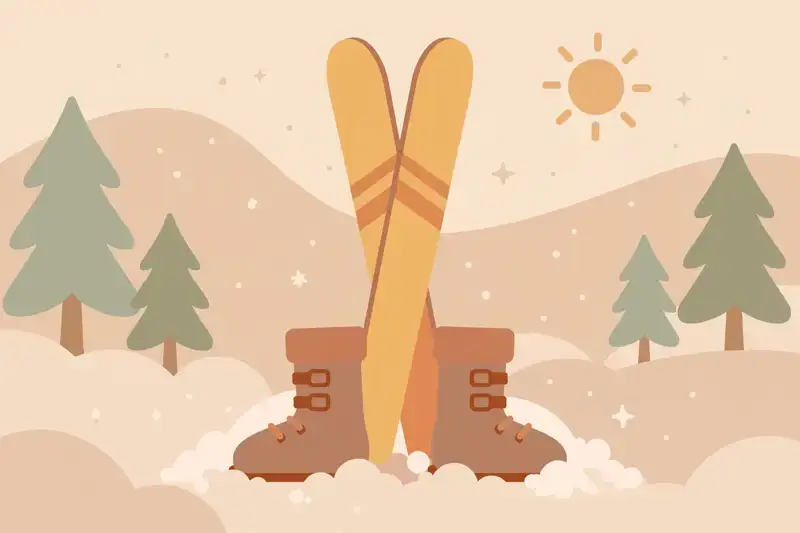
Rent everything at first: skis, boots, poles, helmet. Rental shops set you up in twenty minutes and the gear is tuned for beginners. Of the three, boots matter most. They should be snug, with your toes just brushing the front when you stand upright and pulling back when you flex forward. Painful boots ruin days; good boots make skiing possible.
Always wear a helmet. Modern helmets are warm, comfortable, and non-negotiable. As for skis, beginners want short, soft skis that turn easily; the shop knows this. Do not buy gear until you have at least five days on snow, because by then you will know what you actually like.
Lesson 3
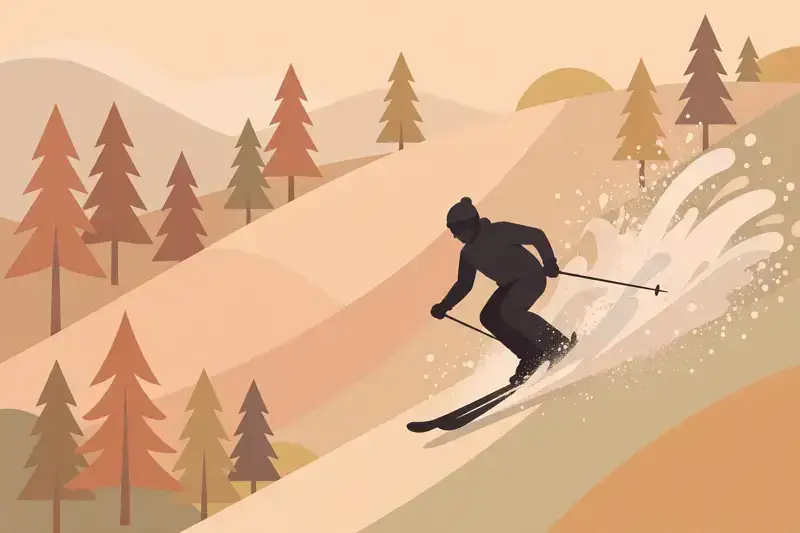
Before you ski downhill, you have to move on flat snow. Shuffle with your skis in a slight V, poles pushing. To climb a small hill, sidestep up like a crab. These feel silly for about ten minutes and then become second nature.
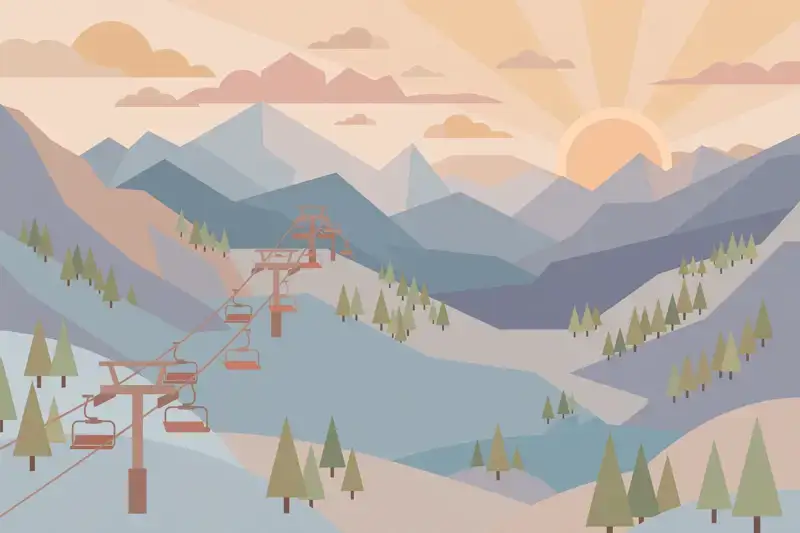
Lifts: the magic carpet is a moving walkway, just stand on it. The chairlift is the rite of passage. Slide forward as it approaches, sit as it scoops you, lower the bar, and at the top, stand up and glide straight ahead, poles ready. Falling is fine; getting up is the skill. Roll to your side, bring your skis downhill of you across the slope, plant your poles, and push up.
Lesson 4
The wedge, tips together and tails apart like a pizza slice, is your brake and your first turning tool. Push both heels out to widen the wedge and you slow down; narrow it and you speed up. On the bunny hill, practice gliding straight in a small wedge and stopping on command. Stopping reliably is the foundation of everything.
The wedge turn: from a straight glide, press more weight onto one ski and that ski becomes the turning ski, guiding you in an arc. Shift the weight and you turn the other way. It is not elegant, but it is controlled, and controlled gets you down green runs safely while your parallel turn develops.
Lesson 5
Linking turns means finishing one turn and flowing into the next without stopping in between, carving S-shapes down the hill. The rhythm: turn, traverse across the slope, turn the other way. Traversing between turns controls your speed far better than braking, because each turn itself scrubs speed.
The shape to aim for is the round turn, finishing each turn slightly uphill across the slope. Beginners tend to rush the turn and point the skis straight downhill, which is where speed builds terrifyingly. Finish your turns. A completed turn is a controlled turn, and control is speed management.
Lesson 6
Parallel skiing, both skis pointing the same direction through the turn, is the goal. The bridge is the wedge christie: start the turn in a wedge, then bring the inside ski parallel as the turn develops. Practice it on easy terrain until the wedge phase gets smaller and smaller.
The technical heart of the parallel turn is edging and pressure. Roll both ankles and knees into the turn to engage the edges, and keep most of your weight on the outside (downhill) ski. Your upper body stays quiet and facing downhill while your legs turn beneath you. When it clicks, it feels like the skis are doing the work, because they are.
Lesson 7
Trail ratings are standardized in North America: green circle is easiest, blue square intermediate, black diamond expert, double black for the truly serious. Ratings are relative to the resort, so a blue at one mountain might be a black at another. Always start a new resort one level below what you ski at home.
Read the slope before you drop in. Look for the fall line (the direction a ball would roll), note where it steepens, and plan your line. Morning snow is firm and fast; afternoon snow is softer and slower. Visibility matters enormously: flat light on an overcast day hides every bump, so slow down when you cannot read the snow.
Lesson 8
Different snow demands different skiing. Powder, the deep fluffy stuff of dreams, wants a centered stance, gentle rhythmic turns, and speed; slow down too much and you sink. Keep your skis closer together and let them float. Ice wants the opposite: sharp edges, patient round turns, and no sudden moves. On ice, less is more.
Moguls, the bumps that form on steeper runs, are a skill unto themselves. The beginner strategy is simple: ski around them, not through them, using the smooth snow on their sides. When you are ready to learn bumps properly, take a lesson; they are the fastest way to expose every flaw in your technique, which is exactly why they are such good teachers.
Lesson 9
Skiing has a code, and it is mostly common sense written down. The downhill skier has the right of way, always; it is your job to avoid the people below you, because they cannot see you. Do not stop where you are invisible from above, like just over a roll or in the middle of a narrow trail. Pull to the side.
Look uphill before merging onto a trail or starting downhill. Obey closures; closed terrain is closed for avalanche or safety reasons, not to annoy you. And ski in control, which means being able to stop or avoid anyone at any time. Most collisions are the uphill skier's fault, and the code is clear about that.
Lesson 10
Dress in three layers. Base layer: merino wool or synthetic, never cotton, because cotton holds sweat against your skin and sweat makes you cold. Mid layer: fleece or light insulation for warmth. Outer layer: a waterproof, breathable ski jacket and pants to block wind and snow.
Extremities decide comfort: warm ski socks (one pair, not two; bunching causes blisters), waterproof gloves or mittens (mittens are warmer), a neck gaiter, and goggles, which are vastly better than sunglasses in snow and wind. You can rent the outer layers at most resorts if you are not ready to buy. Being warm is the difference between a great day and a miserable one.
Lesson 11
Skiing has a reputation for expense, but it is manageable. Buy lift tickets in advance online, which is dramatically cheaper than the window price. Consider multi-day passes or a season pass if you will ski more than a handful of days; the per-day math gets friendly fast.
Stay in towns near the resort rather than slope-side, pack lunches instead of buying $20 mountain burgers, and rent gear in town rather than at the resort base. Weekdays beat weekends for both price and empty slopes. The cheapest ski day is a local hill on a Tuesday with a packed lunch, and it is often the most fun.
Lesson 12
Aim for five to ten days in your first season. Day one: lesson and bunny hill. Days two and three: green runs, linking wedge turns. Days four to six: easy blues, working toward parallel. By day ten, most learners ski blues comfortably and are eyeing their first easy black with a mix of fear and desire.
Graduation
You know how to gear up, stop, turn, link turns, read a trail map, stay safe, dress warm, and ski on a budget. That is a complete beginner education. The mountain rewards the steady learner, and every day on snow makes the next one better. In one piece first, with style soon after.
Keep learning
This course is part of Starvard University, striving for greatness.
A note on accuracy: Much of what you read at Starvard was created with help from AI agents, working alongside people. We check what we can, but we cannot guarantee that everything here is true, current, or complete. If something really matters, your health, your money, a grade, a job, please verify it with a trusted source before you rely on it.