Starvard University · Real Estate
Buying, renting, and building wealth through property. The honest math, without the guru hype.

The whole course in brief
Twelve lessons, distilled. Read this and you will see through every real estate pitch.
This is education, not financial or legal advice. Laws and markets vary; verify everything locally.
The twelve lessons
Lesson 1
"Renting is throwing money away" is the most expensive sentence in personal finance. Rent buys you a place to live, flexibility to move, and freedom from repair bills, property taxes, and interest payments. A renter who invests the difference between rent and ownership costs often ends up wealthier than a buyer. The math is closer than the slogans admit.
The honest comparison: add up the true monthly cost of owning (mortgage, taxes, insurance, maintenance, HOA) and compare it to rent for a similar place. In expensive cities, renting often wins for years. In cheaper markets, buying often wins. There is no universal answer, only your market's math.
Buying makes sense when you will stay put for at least five to seven years, your job is stable, and the monthly ownership cost is near or below rent. Shorter than that, transaction costs (roughly 8 to 10 percent to buy and sell) eat any gains. Flexibility has real value. Price it.
Lesson 2
A $300,000 house with 10 percent down and a 30-year mortgage does not cost $300,000. With interest, you will pay roughly $550,000 to $600,000 over the life of the loan. Add property taxes (1 to 2 percent of value per year), insurance, and maintenance (budget 1 percent of value per year), and the sticker price is barely half the story.
The early years are the cruelest: most of your mortgage payment goes to interest, not principal. After five years of payments on a 30-year loan, you have barely dented the balance. This is why short stays lose money. You paid mostly interest and transaction costs, and built almost no equity.
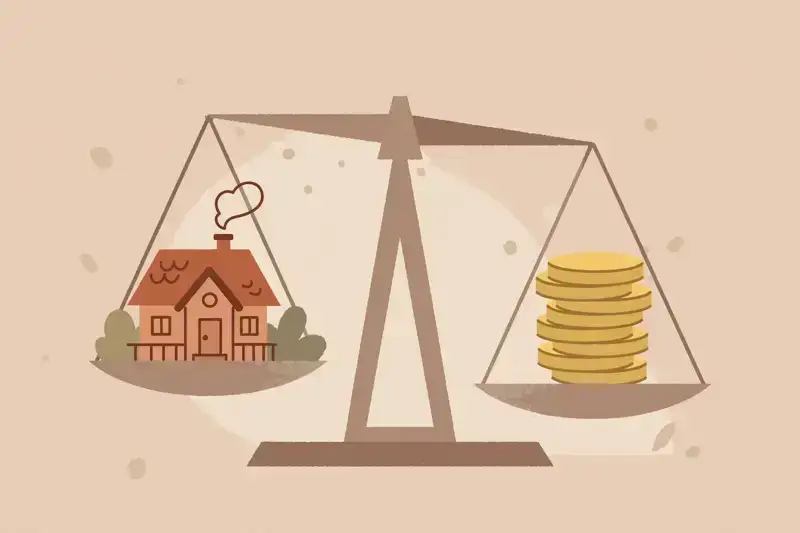
None of this means buying is bad. It means buying with eyes open. Run the full numbers before you fall in love with the kitchen. A spreadsheet is cheaper than a regret.
Lesson 3
You can renovate a kitchen. You cannot renovate a neighborhood. The land under the house, its proximity to jobs, schools, transit, and amenities, drives most of long-term appreciation. A mediocre house in a great area beats a great house in a mediocre area, almost every time.
What makes a location good? Growing population, diverse employers, good schools, walkability, and constrained supply (water, mountains, or zoning that limits new building). These are slow-moving forces, which is exactly why they are reliable. Fads move fast. Geography does not.
Visit at different times: weekday morning, Friday night, Sunday afternoon. Talk to neighbors. Check crime maps, school ratings, and planned developments. An hour of local research beats a hundred hours of house research, because you are really buying the location with a house attached.
Lesson 4
For investment property, one number rules: monthly cash flow. Rent minus all expenses (mortgage, taxes, insurance, maintenance, vacancies, management). If the result is positive every month, the property pays you to own it. If it is negative, you are subsidizing your tenant's housing and praying appreciation bails you out. That is speculation, not investing.
Be ruthless with expenses. Budget 5 to 10 percent for vacancies (tenants leave), 5 to 10 percent for maintenance (things break), and management costs even if you self-manage at first (your time has value). Beginners consistently underestimate expenses and overestimate rents. The deal has to survive honest numbers.
Appreciation is the bonus, not the plan. Markets can stay flat for a decade. Cash flow pays you through flat markets and lets you hold forever. A property that cash flows is a property you never have to sell.
Lesson 5
The 1% rule: monthly rent should be at least 1% of the purchase price. A $200,000 property should rent for $2,000 a month. It is a quick filter, not a verdict. If a property fails it badly, the cash flow math probably does not work, and you can move on in seconds instead of hours.
In expensive coastal markets, almost nothing passes the 1% rule, which tells you something real: those markets are appreciation bets, not cash flow markets. In the Midwest and South, plenty of properties pass, which is why cash flow investors hunt there. The rule reveals the market's character.
After the filter, do the real analysis: actual rents from comparable listings, actual taxes from the county, real insurance quotes, honest maintenance budgets. The 1% rule gets you to the shortlist. The spreadsheet makes the decision.
Lesson 6
Leverage is why real estate builds wealth faster than stocks for ordinary people. Put $40,000 down on a $200,000 property. If it appreciates 5%, you gained $10,000 on your $40,000: a 25% return, before cash flow and principal paydown. The mortgage multiplied your money's reach.
But multipliers work both ways. If the property drops 5%, you lost 25% of your cash. If rents do not cover the mortgage, leverage turns a bad deal into a monthly bleed. And leverage comes with a lender who gets paid first, every month, no matter what. Respect the multiplier.
The safe way to use leverage: buy well below your maximum approval, keep cash reserves for six months of expenses, and make sure the property cash flows at current rents. Leverage on a good deal is a wealth engine. Leverage on a bad deal is a trap with monthly payments.
Lesson 7
The difference between a great rental and a nightmare is rarely the property. It is the tenant. One bad tenant, months of missed rent, legal fees, and trashed floors, can erase years of cash flow. Screening is the highest-paid work in landlording.
Screen every applicant the same way, every time: credit check, income verification (3x rent is the standard), rental history, and references from previous landlords. Follow fair housing laws exactly. Consistency is both legal protection and good business. Trust your screening, not your gut.
Then be a good landlord. Fix things fast, communicate clearly, respect their home. Good tenants are worth more than a small rent increase; turnover is the most expensive event in rentals. A reliable tenant paying slightly below market beats a vacant unit at top dollar.
Lesson 8
House hacking: buy a small multi-unit property (or a house with rentable rooms), live in one part, rent the rest. The rents cover most or all of your housing cost. You live nearly free while building equity. For a first property, it is the best deal in real estate.
The math is friendly: owner-occupied loans need smaller down payments (3 to 5 percent versus 20 to 25 for investors), get better rates, and you learn landlording with training wheels while living on site. A duplex where the other unit covers the mortgage is a life-changing arrangement.
The tradeoff is lifestyle: you are a landlord to your neighbors. Set boundaries early, keep it professional, and remember you can move out in a year and keep the whole thing as a rental. Many portfolios started with exactly one house hack.
Lesson 9
Real estate builds wealth four ways at once: cash flow, principal paydown (tenants buying your mortgage down), appreciation, and tax benefits. Each is slow. Together, over a decade or more, they are formidable. Anyone promising faster is selling something.
The seminar industry thrives on shortcut fantasies: no-money-down empires, flipping riches, secret systems. Flipping is a job, not an investment, and a competitive one where experienced operators eat beginners. Wholesaling, syndications, and guru courses mostly transfer wealth from students to teachers.
The boring path works: buy one solid property, manage it well, hold it for years, repeat when you can. Ten years of boring beats two years of exciting followed by a spectacular lesson. Wealth in real estate is measured in decades.
Lesson 10
Hot markets are where discipline goes to die. When everyone at dinner is talking about the city's boom, prices already reflect the boom. Buying at the peak of hype means paying top dollar with maximum competition and minimum diligence. The money was made by the people who bought before it was hot.
Warning signs: bidding wars on every listing, "can't lose" language, seminars filling hotel ballrooms, friends flipping with no experience. These are not buy signals. They are the market telling you the easy money is gone and the greater-fool phase has begun.
Your edge is unglamorous: buy where the numbers work today, not where the story is exciting. Cash flow does not care about hype. A boring property in a boring market that pays you monthly beats a thrilling market that bleeds you monthly.
Lesson 11
Start small, start local, start with numbers you understand. A modest single-family home or duplex within driving distance, where you know the neighborhoods and can check on things. Your first property is tuition: you will learn more in year one than in any course, so keep the stakes survivable.
Before you buy: get pre-approved, build a six-month reserve fund, line up an investor-friendly agent and a thorough inspector, and run the numbers three ways (optimistic, realistic, pessimistic). If it only works in the optimistic case, walk away. There will be another deal.

Expect surprises anyway: the repair you missed, the vacancy that ran long, the tenant who tested you. Budget for them, learn from them, and keep going. Every experienced investor has a story about property number one. Yours is how you earn the title.
Lesson 12
Where you go from here depends on your situation, but the path is clear:
Graduation
You now see real estate clearly: the honest rent-versus-buy math, the true cost of owning, why location rules, how cash flow separates investing from speculating, what leverage really does, why tenants matter most, the house hack shortcut, and why slow beats hype every time. Property rewards the patient and punishes the rushed. Be the patient one.
Keep learning
This course is part of Starvard University, striving for greatness.
A note on accuracy: Much of what you read at Starvard was created with help from AI agents, working alongside people. We check what we can, but we cannot guarantee that everything here is true, current, or complete. If something really matters, your health, your money, a grade, a job, please verify it with a trusted source before you rely on it.