Starvard University · Meditation
Sit still, breathe, notice things. Twelve plain-English lessons on building a meditation practice that actually sticks. No incense required, no mysticism, just a quieter mind.

The whole course in brief
The twelve lessons
Lesson 1
Strip away the mystique and meditation is simple: you sit still, you pay attention to something (usually your breath), your mind wanders, you notice it wandered, and you bring it back. Repeat. That loop, noticing and returning, is the entire exercise. Everything else is decoration.
It is attention training. Every return strengthens the same mental muscle you use to focus at work, listen to a friend, or resist the phone's pull. Studies consistently show regular practice improves attention, emotional regulation, and stress resilience. Not because meditators become serene gurus, but because they get thousands of reps at noticing where their mind is and choosing where it goes.
Forget the goal of "empty mind." That is not the target and never was. Thoughts will come. The practice is not stopping thoughts. It is changing your relationship with them: noticing them as events passing through, not orders to obey. That small shift changes everything.
Lesson 2
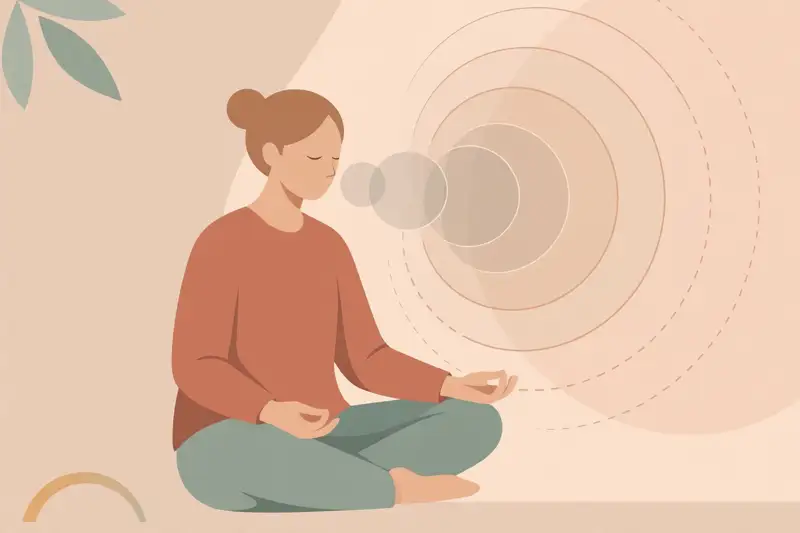
The breath is the perfect meditation object for three reasons: it is always with you, it is always in the present, and it is boring enough to reveal your mind's habits. You cannot breathe in the past or the future. Attention on the breath is attention on now, which is the entire point.
Do not control it. Just feel it: the cool air at the nostrils, the rise of the chest or belly, the pause, the release. Pick one spot and rest your attention there lightly, like a hand resting on a table, not a grip. When the breath is subtle, that is fine. Subtle is good training.
Counting helps beginners. Count each exhale up to ten, then start over. When you lose count, which you will, begin again at one without judgment. The counting is scaffolding, not the building. Drop it whenever the bare attention feels stable. The anchor is always there when you need it back.
Lesson 3
Here is your first meditation, right now. Set a timer for five minutes. Sit comfortably, close your eyes or soften your gaze, and feel your breath. When you notice you are thinking about something else, which will happen within seconds, gently return to the breath. That is it. You just meditated.
Five minutes is the right starting dose. It is short enough to do daily without dread and long enough to actually practice returning. Do not start with twenty minutes. Starting big is how practices die by Thursday. Start embarrassingly small and let consistency do the heavy lifting.
Expect it to feel unremarkable. No bliss, no visions, probably some fidgeting. That is normal and correct. Meditation's benefits are cumulative and quiet: slightly less reactive Tuesday, slightly clearer Thursday. You are planting, not harvesting. The harvest comes later, and it is worth it.
Lesson 4
Your mind will wander during meditation. Constantly. This is not failure. This is the workout. Every time you notice the wander and return, you have done one rep of the exact skill meditation builds. A sit with a hundred wanders and a hundred returns is a hundred reps. That is a great session.
The magic moment is the noticing. Most of life is spent lost in thought without knowing it. Meditation trains the instant of waking up: "oh, I am thinking." That instant, practiced thousands of times on the cushion, starts happening off the cushion too. You catch the spiral mid-spiral. You notice the phone reach before the reach. That is the superpower.
Be kind about the returns. No scolding, no frustration, no grading the session. Just: noticed, returning. Treat your wandering mind like a puppy you are training: patiently, repeatedly, with good humor. Harshness tightens the mind. Kindness settles it. The tone of the return matters as much as the return itself.
Lesson 5
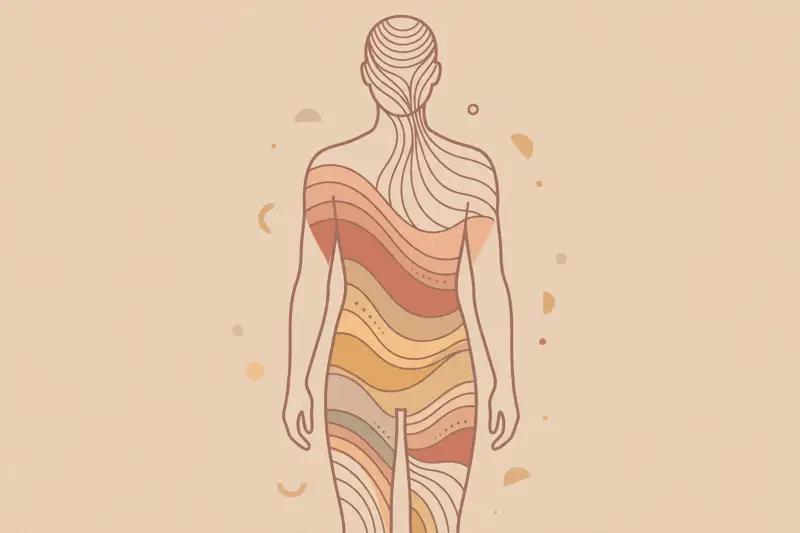
The body scan is meditation's second great technique: slowly move your attention through your body, part by part, simply noticing sensations. Feet, legs, hips, belly, chest, hands, arms, shoulders, neck, face, head. No fixing, no judging, just noticing. Ten to twenty minutes, lying down or sitting.
It trains interoception, your sense of your body's internal state, which is the foundation of emotional awareness. Most people live entirely in their heads and discover their shoulders have been tense for six hours only when someone asks. The scan builds the habit of checking in, which means you catch stress, fatigue, and tension early, when they are easy to address.
Do not expect sensation everywhere. Some areas feel like nothing, and "nothing" is a valid observation. Itches, aches, warmth, tingling, numbness: all fine, all just data. If you fall asleep during body scans, you probably needed sleep. Do it sitting up, or earlier in the day. The scan is attention practice, not a nap with extra steps.
Lesson 6
Meditation does not require sitting. Walking meditation brings the same attention training to movement: walk slowly, feel each step, the lift, the move, the place. Notice the pressure shifts, the balance adjustments, the air on your skin. When the mind wanders, return to the feet. Same loop, different anchor.
It is perfect for restless days when sitting feels impossible. Ten minutes of slow walking in a hallway, a garden, or a quiet street counts fully as practice. It is also a bridge to everyday mindfulness: once you can stay present walking slowly, staying present walking normally gets easier, then standing in line, then living.
Try the transition practice. After a sitting session, stand and walk mindfully for five minutes before re-entering your day. It carries the calm forward instead of shattering it with an immediate phone check. The boundary between practice and life gets thinner, which is exactly the goal.
Lesson 7
Posture matters, but comfort matters more. The ideal is alert and relaxed: spine naturally upright, shoulders soft, hands resting, chin slightly tucked. This posture keeps you awake without tension. But a perfect lotus on a painful knee helps no one. A chair is completely fine. Meditating comfortably beats meditating impressively.
If sitting on the floor, elevate your hips on a cushion so your knees drop below hip level. This single adjustment fixes most floor-sitting misery. In a chair, sit away from the backrest with feet flat, or use the backrest if needed. There is no posture police. The only bad posture is one that makes you quit.
Expect some discomfort anyway. Legs fall asleep, backs ache, itches arrive at the worst moments. Notice them as sensations, adjust if truly needed, and otherwise let them be part of the practice. Discomfort is an excellent teacher of the core skill: feeling something without immediately reacting. That lesson pays off everywhere.
Lesson 8
Meditation lives or dies on ritual. Same time, same spot, every day. Morning works best for most people: before the day's demands start negotiating. The spot can be a corner of a room, a specific chair, a cushion by the window. After a few weeks, sitting down there starts settling your mind automatically. The ritual becomes the on-ramp.
Link it to an existing habit. After brushing teeth, before coffee, right after the morning walk: habit stacking removes the daily "when should I meditate" decision, and decisions are where practices die. Protect the slot like an appointment. Five minutes is short, but it needs its defended five minutes.
Track the streak lightly. A simple calendar X each day builds momentum, but do not let a broken streak end the practice. Missed a day? The rule is: never miss twice. The practice is not the streak. The practice is the returning, to the cushion and to the breath, again and again, for years.

Lesson 9
Some sits are hard. Boredom arrives and whispers that this is pointless. Itches demand scratching. Emotions you have been avoiding show up now that you are finally still. This is not meditation going wrong. This is meditation working. The stillness reveals what the busyness was covering.
Boredom is the doorway, not the wall. Sitting with boredom without reaching for stimulation trains the patience muscle that modern life atrophies. Every urge to quit that you notice and ride out makes the next urge weaker. The itch you do not scratch teaches you that urges peak and pass. These are not distractions from the practice. They are the practice.
When real emotional storms arrive, be gentle. You can open your eyes, shorten the sit, or switch to walking meditation. Meditation is not about enduring suffering. If difficult emotions persist, that is what therapists are for, and combining the two is wise. The cushion is a gym, not an emergency room.
Lesson 10
Loving-kindness meditation trains a different muscle: goodwill. Silently repeat phrases of well-wishing, first toward yourself, then expanding outward: "May I be happy. May I be healthy. May I be at peace." Then a loved one, a neutral person, a difficult person, all beings. It feels awkward at first. Do it anyway.
You are not forcing feelings. You are planting intentions and noticing what arises, including resistance. Many people discover that wishing themselves well is the hardest part, which is itself useful information. The practice gradually softens the inner critic and builds genuine warmth, which research links to less anxiety and better relationships.
Use it as a complement to breath meditation, not a replacement. A few minutes at the end of a sit, or its own short session weekly. And try the difficult person carefully: start with mildly difficult, not your nemesis. Wishing well does not excuse harm. It frees you from carrying the resentment, which was only ever hurting you.
Lesson 11
The cushion is practice. Life is the game. Mindfulness off the cushion means bringing the same noticing to ordinary moments: the taste of the first coffee, the feeling of water on your hands, the sound of rain, the face of the person talking to you. These micro-practices weave presence into the day.
Use transitions as triggers. Every doorway, every red light, every time you pick up your phone: one conscious breath before continuing. These tiny pauses break the autopilot trance that eats whole days. Three breaths before a difficult conversation. Full attention on the first bite of lunch. Small, constant, transformative.
Single-task sometimes. Eat without the phone. Walk without the podcast. Listen without planning your reply. You will discover that ordinary life, fully attended, is remarkably rich. The present moment was never boring. You were just never there for it. Meditation is how you learn to show up.

Lesson 12
Here is what a year of ten daily minutes buys you. Not enlightenment. Something better: a mind you can steer. You will notice stress earlier and recover faster. Focus will come easier. The space between trigger and reaction will widen, and in that space you will find patience you did not know you had. People will notice before you do.
The change is gradual, then obvious. Month one: you are just building the habit. Month three: you catch yourself mid-spiral sometimes. Month six: sitting feels like brushing teeth, just something you do. Month twelve: you cannot imagine not doing it, and the calm is simply part of who you are. Compounding works on minds too.
So start today, five minutes, same time tomorrow. Do not aim for perfect. Aim for daily. A year from now, you will be someone who meditates, with a quieter mind and a steadier heart, and you will wonder why everyone is not doing this. Then you will send them this course. Sit still. Breathe. Notice things. Repeat for a year.
Graduation
Attention training. The breath as anchor. Five minutes to start. Wandering is the workout. Body scans, walking, a comfortable seat, a daily ritual. Boredom as curriculum, kindness as practice, mindfulness in ordinary moments. That is Meditation 101. No incense, no mysticism. Just a quieter mind, ten minutes at a time.
Keep learning
This course is part of Starvard University, striving for greatness.
A note on accuracy: Much of what you read at Starvard was created with help from AI agents, working alongside people. We check what we can, but we cannot guarantee that everything here is true, current, or complete. If something really matters, your health, your money, a grade, a job, please verify it with a trusted source before you rely on it.