Starvard University · Coffee
Brew better coffee at home. Fresh beans, the right grind, good water, and a few simple methods will beat the coffee shop most mornings.

The whole course in brief
Twelve lessons, one goal: a genuinely great cup at home.
The twelve lessons
Lesson 1
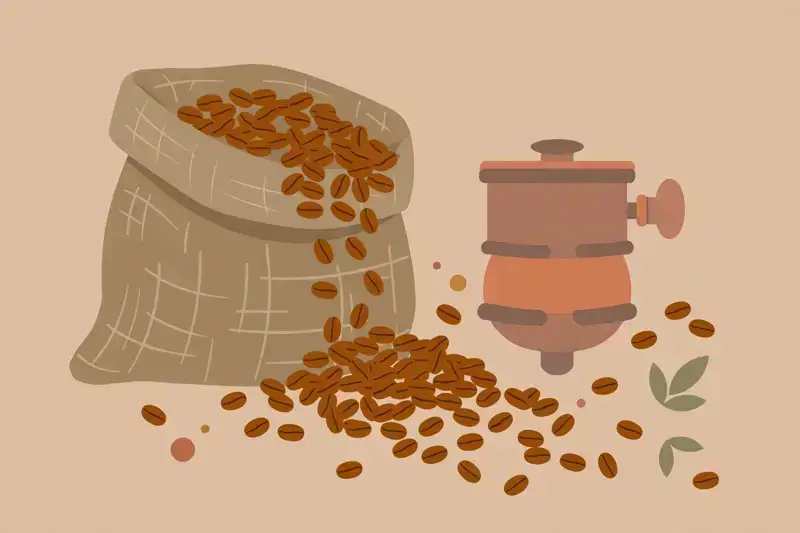
Coffee is a fruit seed, roasted. Two species dominate: Arabica, which is smoother, sweeter, and more complex, and Robusta, which is stronger, more bitter, and higher in caffeine. Nearly all good coffee is Arabica. Roast level then shapes the flavor: light roasts keep the bean's origin character (fruity, floral), dark roasts taste more like the roast itself (smoky, chocolatey).
The single most important quality factor is freshness. Coffee peaks in the weeks after roasting and fades over months. Supermarket beans with no roast date are usually months old and taste like it. A bag roasted two weeks ago from a local roaster will outperform a famous brand roasted six months ago, every single time.
Lesson 2
If you buy one piece of coffee gear, make it a burr grinder. Blade grinders chop unevenly, producing dust and boulders in the same batch, which brews unevenly. Burr grinders crush to a uniform size, and uniform size means even extraction, which means a clean, sweet cup. This one purchase improves every method you own.
Grind size must match the method. French press wants coarse, like breadcrumbs. Pour over wants medium, like sand. Espresso wants fine, like table salt. Too fine for your method and the cup goes bitter; too coarse and it goes sour and weak. Grind right before brewing, because ground coffee stales in minutes while whole beans last weeks.
Lesson 3
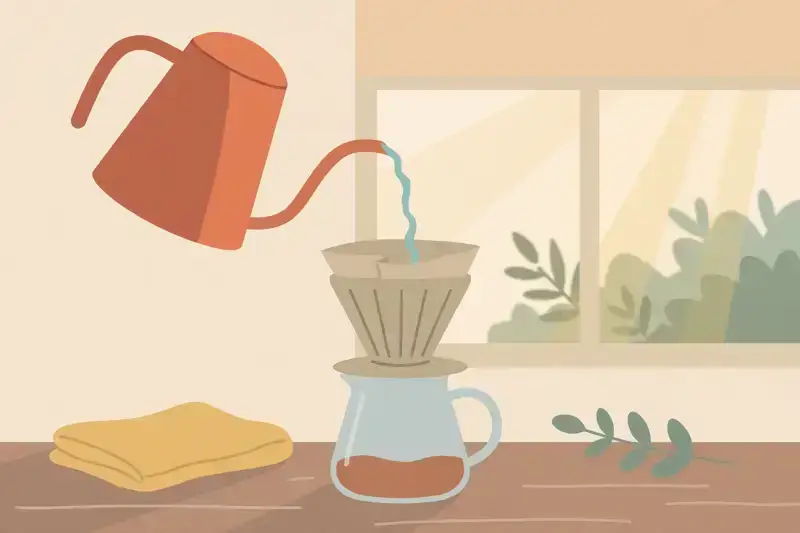
Coffee is 98 percent water, so water quality shows up in the cup. If your tap water tastes off, your coffee will too. A simple carbon filter pitcher is enough for most people. Temperature matters too: aim for just off the boil, around 195 to 205 degrees. Boiling water scorches the grounds; lukewarm water under-extracts.
Ratio is your recipe. Start at 1:16, one gram of coffee to sixteen grams of water, which works out to roughly two tablespoons of coffee per six ounces of water. A cheap kitchen scale removes all guesswork and is the fastest way to repeat a great cup. Too weak? Add coffee. Too strong? Add water. Adjust one variable at a time.
Lesson 4
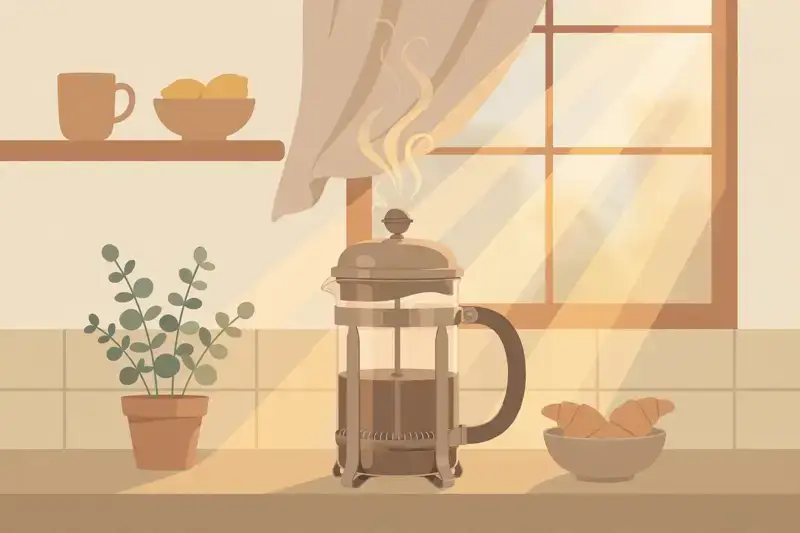
The French press is the most forgiving path to great coffee. Add coarse-ground coffee, pour water just off the boil, stir once, and wait four minutes. Break the crust that forms on top, skim off the foam, then plunge slowly and pour immediately so it stops brewing.
The result is rich and full-bodied because the metal filter lets the coffee's natural oils through, unlike paper filters. The classic mistake is leaving the coffee sitting in the press after plunging, which keeps extracting and turns bitter. Pour it out right away. A $30 press and fresh beans will beat most coffee shops.
Lesson 5
Pour over, with a dripper like a V60 or Chemex, makes the cleanest, most articulate cup. The paper filter removes oils and sediment, so origin flavors shine. The tradeoff is technique: you control the pour, so you control the result.
The method: rinse the filter with hot water first (this also warms the brewer), add medium-ground coffee, pour just enough water to wet the grounds and wait 30 seconds (the bloom, which releases CO2), then pour slowly in spirals until you hit your target weight. Total brew time around two and a half to three minutes. It takes practice, but the clarity is worth it.
Lesson 6
The automatic drip machine gets mocked, but a good one with fresh beans and the right grind makes a perfectly fine cup, and it makes it while you are in the shower. The enemy is the machine's hot plate, which cooks the coffee if it sits. Brew into a thermal carafe, or brew only what you will drink right away.
The moka pot is the Italian stovetop classic and the cheapest route to strong, espresso-ish coffee. Fill the bottom with hot water up to the valve, fill the basket with fine-ish grounds (do not tamp), and brew on medium heat. Take it off the heat the moment it starts gurgling loudly. It is not true espresso, but with milk it makes a superb home latte.
Lesson 7
Espresso is coffee brewed under pressure: hot water forced through finely ground coffee in about 25 to 30 seconds, producing a small, intense shot with crema on top. Real espresso needs a machine that hits about nine bars of pressure and a grinder that can go fine enough, which is why the entry cost is real.
If you go for it, learn the variables in order: dose (around 18 grams for a double), grind (fine enough for a 25 to 30 second pull), and distribution (level grounds before tamping). Change one at a time. Espresso is the least forgiving method and the most rewarding to master. If the budget is not there yet, a moka pot gets you 80 percent of the joy for 5 percent of the price.
Lesson 8
Every cafe milk drink is espresso plus steamed milk in different proportions. A latte is mostly milk with a thin layer of foam. A cappuccino is equal parts espresso, steamed milk, and thick foam. A flat white is like a latte with less milk and silkier, thinner foam. A macchiato is espresso "stained" with a spoonful of foam.
At home, you can steam milk with a French press: heat milk to about 140 degrees (hot to the touch, not scalding), then pump the plunger vigorously to create foam. Whole milk steams best because fat carries texture and sweetness. The secret to all of them is the same: start with good espresso, because milk hides a lot but not everything.
Lesson 9
Look for a roasted-on date, not a best-by date. Buy beans roasted within the last month, ideally the last two weeks. After about six weeks off roast, even great coffee fades. Buy whole bean always, in quantities you will finish in two to three weeks.
Origin names tell you the flavor neighborhood. Ethiopian coffees tend toward fruity and floral, Colombian toward balanced and chocolatey, Sumatran toward earthy and heavy. Blends are designed for consistency; single origins are designed for character. Start with a medium roast single origin from a local roaster and taste what fresh actually means.
Lesson 10
Coffee tasting uses three words more than any others: acidity, body, and sweetness. Acidity is brightness, the lively sparkle in a good Ethiopian. Body is weight and texture, the syrupy heaviness of a Sumatran. Sweetness is the natural sugars that survive roasting, the caramel and chocolate notes.
Taste coffee black, even if you normally take milk, because milk hides what you are trying to learn. Slurp it to aerate it across your palate. Compare two coffees side by side and the differences will announce themselves. You do not need to detect blueberries on the first try; "this one is brighter, that one is heavier" is real tasting.
Lesson 11
Nearly every bad cup is an extraction problem. Sour, salty, or thin means under-extracted: the water did not pull enough out of the grounds. Fix it by grinding finer, using hotter water, or brewing longer. Bitter, harsh, or ashy means over-extracted: the water pulled too much. Fix it by grinding coarser, using slightly cooler water, or brewing shorter.
Weak but not sour is a ratio problem, not an extraction problem: add more coffee. And if the cup tastes papery, stale, or flat regardless of method, the beans are old. No technique fixes stale beans. Diagnose in this order: beans, grind, water, ratio, time.
Lesson 12
Here is the sensible buying order. First, fresh beans from a local roaster. Second, a burr grinder. Third, a scale. Fourth, a brewer: French press for richness and ease, pour over for clarity. Fifth, a gooseneck kettle for pour over control. That is the whole kit, and it costs less than two months of coffee shop lattes.
Graduation
Fresh beans, the right grind, good water, a fair ratio, and a method you have practiced. That is the entire craft, and it is enough to make coffee at home that beats the shop most mornings. Keep tasting, keep adjusting one variable at a time, and enjoy the ritual.
Keep learning
This course is part of Starvard University, striving for greatness.
A note on accuracy: Much of what you read at Starvard was created with help from AI agents, working alongside people. We check what we can, but we cannot guarantee that everything here is true, current, or complete. If something really matters, your health, your money, a grade, a job, please verify it with a trusted source before you rely on it.