Starvard University · Chess
The game of thinking ahead. Learn how every piece moves, the tactics that win games, and the thinking habits of a real player.

The whole course in brief
Twelve lessons, one goal: play real chess with real understanding.
The twelve lessons
Lesson 1
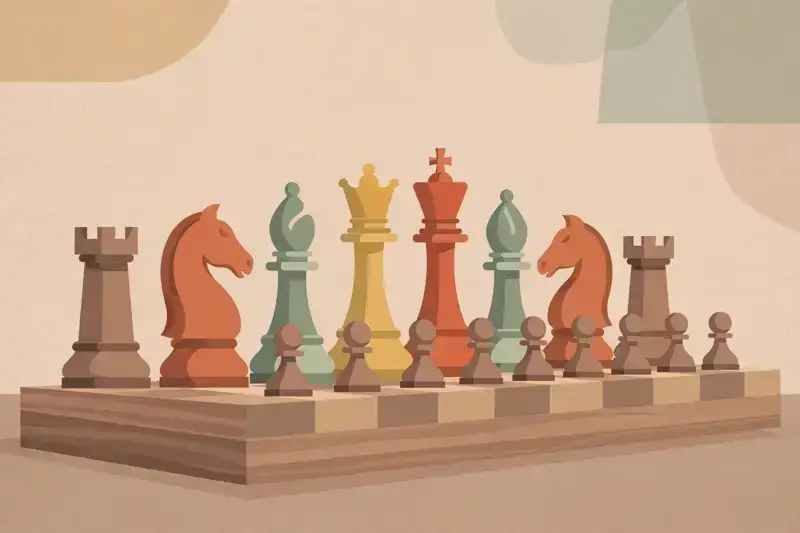
The board has 64 squares, alternating light and dark, and it goes on with a light square in each player's right-hand corner. White always moves first. Each side starts with sixteen pieces: one king, one queen, two rooks, two knights, two bishops, and eight pawns. Queens start on their own color, which is the easiest way to remember the setup.
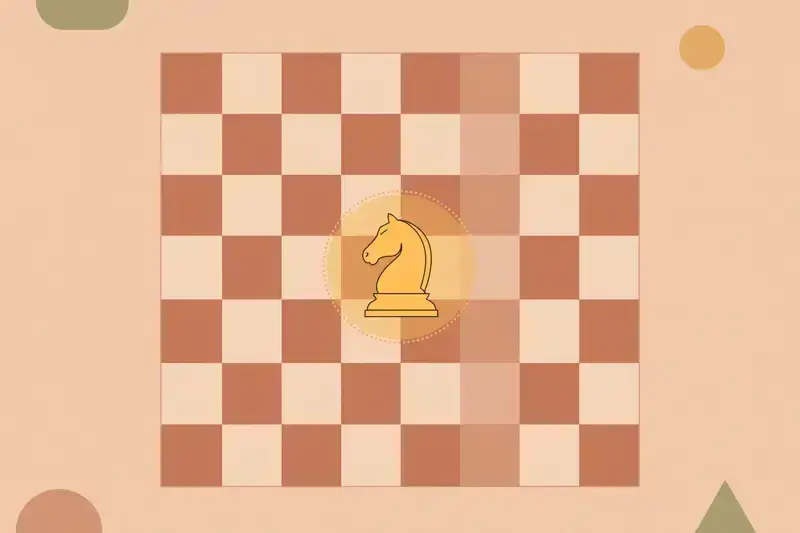
The moves: rooks travel in straight lines, bishops on diagonals, queens do both. Kings move one square in any direction. Knights jump in an L shape, two squares one way and one the other, and they are the only piece that jumps over others. Pawns move forward one square (two from their starting rank), capture one square diagonally forward, and never move backward. That is the whole game of movement.
Lesson 2
Castling is the one move where two pieces move at once: the king slides two squares toward a rook, and the rook hops over to the other side. It tucks your king to safety and connects your rooks in one move. You cannot castle if the king or that rook has moved, if the king is in check, or if the king would pass through check.
En passant is the weird one: if an enemy pawn jumps two squares from its start and lands beside your pawn, you can capture it as if it had moved only one square, but only on the very next move. Promotion is the happy one: a pawn that reaches the far end becomes a queen, rook, bishop, or knight, almost always a queen. New queens appear constantly in beginner games.
Lesson 3
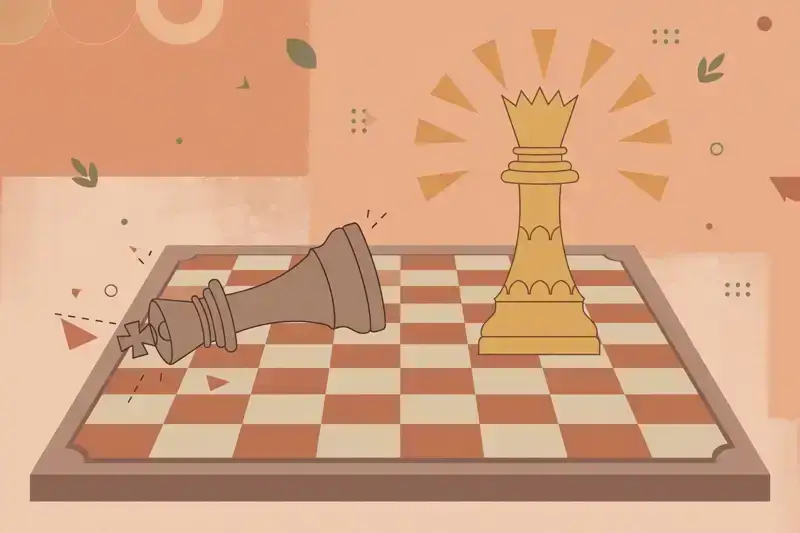
Check means your king is under attack. You must get out of check on your move: move the king, capture the attacker, or block the attack. You are never allowed to leave your king in check or move into check. Checkmate means the king is in check and there is no legal way out. The game ends immediately. You do not capture the king; the threat alone ends it.
Stalemate is the trap. If the player to move is not in check but has no legal move, the game is a draw. Beginners lose won games to stalemate constantly, usually by stripping the enemy king of every move while hunting for mate. When you are winning, always leave the enemy king a legal move until you deliver checkmate.
Lesson 4
The standard values: pawn 1, knight 3, bishop 3, rook 5, queen 9, and the king is priceless because losing it ends the game. These numbers guide every trade. Trading your knight for two pawns is roughly even. Trading your rook for a bishop loses about two points of material, which is usually a bad deal.
Values are guidelines, not laws. A knight in the center can outplay a rook stuck in the corner, and a passed pawn racing toward promotion can be worth more than a piece. But until your judgment develops, count material. Being up a piece with no compensation wins the overwhelming majority of beginner games. Simple math, played patiently, is a strategy.
Lesson 5
Forget memorizing opening lines. Five principles will carry you through the first ten moves of every game. One: control the center with pawns, ideally e4 and d4. Two: develop knights before bishops, and develop toward the center. Three: castle early, usually by move ten. Four: do not move the same piece twice while others sit home. Five: do not bring the queen out early where it can be chased around.
These principles exist because they all serve one goal: get your pieces to good squares quickly and safely so you can play the middlegame with a real army. Players who memorize traps but ignore development lose to players who just develop. Principles beat memorization at every level below expert.
Lesson 6
Tactics are short sequences that win material, and they decide the vast majority of beginner games. A fork is one piece attacking two at once; knights are the great forkers because their weird movement is hard to see coming. A pin is an attack on a piece that cannot move because a more valuable piece stands behind it. A skewer is the reverse: attack the valuable piece so it moves and exposes the piece behind it.
Learn to spot these three patterns and your results will transform, because most opponents are hanging material every few moves. The pattern to drill: look at every piece and ask what it attacks, especially knights and bishops aimed at the king and queen. Tactics are pattern recognition, and patterns are trainable.
Lesson 7
A discovered attack happens when you move one piece and uncover an attack from another piece behind it. The moved piece can also give check or attack something itself, creating a double threat that is nearly impossible to meet. These are the tactics that feel like magic when you first spot one.
Related ideas: the double check, where both the moved piece and the uncovered piece give check at once. The only legal reply to double check is moving the king, which makes it brutally strong. Also learn the back-rank mate: a king trapped on its back rank by its own pawns, mated by a rook or queen. It ends countless games and is entirely preventable by giving your king an escape square.
Lesson 8
King and rook versus a lone king is a forced win, and it comes up constantly. The technique: use your rook to cut the enemy king off, shrinking its box one rank or file at a time, then walk your own king up to help. Never let the enemy king capture your rook; keep it protected or far away.
The finish: drive the king to the edge of the board, bring your king two squares away facing it (opposition), and deliver mate with the rook on the back rank. The classic blunder is stalemating by careless rook checks, so when the enemy king is trapped, pause and make sure it has a legal move before every check. Practice this against a computer until it takes you under a minute.
Lesson 9
Most games with a material edge come down to promoting a pawn, so learn the king and pawn ending. The key concept is opposition: when the kings face each other with one square between, the player not to move has the advantage, because the other king must step aside.
The rule of the square tells you whether a pawn can outrun the enemy king: draw a square from the pawn to the promotion rank, and if the enemy king is inside it, the king catches the pawn. Learn this and you will instantly know which pawn races to play and which to abandon. Endgames feel technical, but a little technique converts a lot of wins.
Lesson 10
Strong players do not calculate everything; they look at forcing moves first. Before every move, run the checklist: what checks do I have, what captures do I have, what threats can I make. Forcing moves limit the opponent's replies, which makes them calculable. Quiet moves branch into infinity.
Then do the same for your opponent: what are they threatening. Most blunders are not failed deep calculation; they are missed one-move threats. Ask "what did their last move attack" every single time before you touch a piece. This one habit will save more games than any opening book.
Lesson 11
The hall of fame of beginner blunders: hanging pieces (leaving a piece where it can be captured for free), moving too fast in winning positions, bringing the queen out early and getting it chased, neglecting king safety, and resigning in positions that are not lost. Nearly every lost game contains at least one of these.
The fixes are habits, not talent. Before every move, scan for what is attacked. When you are winning, slow down, not up. Keep the queen home until developed. Castle. And never resign against a beginner; they will very often return the favor with interest. Patience is a chess skill.
Lesson 12
Chess improvement has a proven formula: tactics puzzles daily, a few slow games weekly, and reviewing your losses. Puzzles build the pattern recognition that wins games. Slow games (at least 15 minutes per side) give you time to actually think. Reviewing losses, even briefly, turns every defeat into a lesson.
Graduation
You know how the pieces move, the special rules, the values, the opening principles, the core tactics, two fundamental endgames, and a real thinking process. That is a genuine chess education. The rest is practice, and practice is the fun part.
Keep learning
This course is part of Starvard University, striving for greatness.
A note on accuracy: Much of what you read at Starvard was created with help from AI agents, working alongside people. We check what we can, but we cannot guarantee that everything here is true, current, or complete. If something really matters, your health, your money, a grade, a job, please verify it with a trusted source before you rely on it.